

Big Action, Real Impact.
〰️
Big Action, Real Impact. 〰️
One Sign. One Mission.
The One Sign for School Foundation (Federal Non-Profit Corp #1813183-0) is an independent research and advocacy organization. We integrate empirical visual geometry testing with field deployments to establish a standardized, text-free graphical emblem for educational infrastructure across civil and crisis settings.
Hospitals rely on the Red Cross. Cultural landmarks carry the Blue Shield. Yet educational institutions, frequented daily by millions of students and educators, lack a single, language-independent visual marker. Current school zones rely on localized text, creating critical safety gaps for non-native drivers, international transit operators, and emergency responders in crisis environments.
We are building the empirical foundation to bridge this gap. Through rigorous legibility testing, campus field trials, and technical whitepaper development, our mission is to deliver a data-backed visual standard capable of earning recognition across municipal safety boards and international multilateral bodies.
Our Mission
The One Sign for Schools Foundation exists to establish an internationally recognized, text-free symbol that designates educational institutions as protected zones under international humanitarian law. We envision a world where every classroom, regardless of geography or geopolitical conflict, remains a safe sanctuary for learning and human potential.
The issue?
Zero Protected Status: Unlike medical facilities or cultural monuments, educational institutions have no dedicated, universal protective emblem under international law.
Classrooms on the Frontline: Tens of thousands of schools worldwide have been damaged, destroyed, or used for military purposes in active conflict zones over the past decade.
Impact on Youth: Millions of students are forced to choose between risking their lives to attend class or abandoning their education entirely.
Core Pillars
Phase 1: Empirical Legibility Research
Executing controlled field trials, starting at Upper Canada College, to measure candidate symbol recognition speed, distance legibility, stroke width, and geometric clarity across diverse focus groups.
Phase 2: Technical Standardization & Sourcing
Sourcing candidate designs through our global competition and compiling field metrics into a formal technical whitepaper aligned with ISO graphical symbol standards.
Phase 3: Multilateral & Soft-Law Engagement
Presenting data-backed technical whitepapers to international bodies (such as UNESCO, the UN, and the ICRC) to advocate for the official adoption of a universal visual marker—ensuring schools are instantly recognized and protected in all settings, from everyday traffic zones to active conflict areas.
Get Involved Today.
Technical Sourcing: Submit candidate graphical concepts through our Global Design Competition to participate in Phase 1 legibility and recognition trials.
Institutional & Academic Partnerships: Collaborate with our research team on pilot field testing, visual optics analysis, and technical whitepaper development.
Policy Outreach: Partner with our foundation to support soft-law standardization and advance international visual protection frameworks for educational facilities globally.
OUR OPERATIONAL ROADMAP
Phase 1: Design Specifications & Technical Whitepaper
Establishing geometric ratios, color psychology principles, and dual-visibility standards (ground-level traffic legibility and high-altitude visual contrast) for candidate visual emblems.
Phase 2: Campus Field Trial & Network Rollout
Executing a pilot study featuring a visual perception timing test and on-campus prototype sign installations, expanded across Toronto to build a quantitative dataset.
Phase 3: Multilateral Framework Engagement
Publishing comprehensive field study metrics to support technical submissions to the International Organization for Standardization (ISO/TC 145) and multilateral humanitarian bodies (UNESCO, ICRC).
A Message from our Founder
Sitting at my desk in high school, it hit me how much our world relies on simple visual signs. Hospitals have the Red Cross and cultural landmarks have the Blue Shield, but schools where millions of kids go every day do not have a single universal symbol to protect them. It made me realize there is a real, overlooked gap in everyday traffic safety and international protection that we can actually solve.
That is why I started the One Sign for School Foundation. In my own life, whether through student leadership, music, or community service, I have always believed in leading by example, working hard, and taking real action to make communities safer and more supportive. Instead of just talking about the problem, we are taking a practical, data-first approach. We are running field tests and visual timing studies to measure how fast people recognize candidate symbols, making sure our design actually works for drivers, pedestrians, and communities everywhere.
Building a new global standard takes time, discipline, and long-term perseverance, but it is a project I am completely dedicated to leading. By getting the visual research right today, we can build a clear, text-free symbol that helps keep students, teachers, and classrooms safe for years to come.
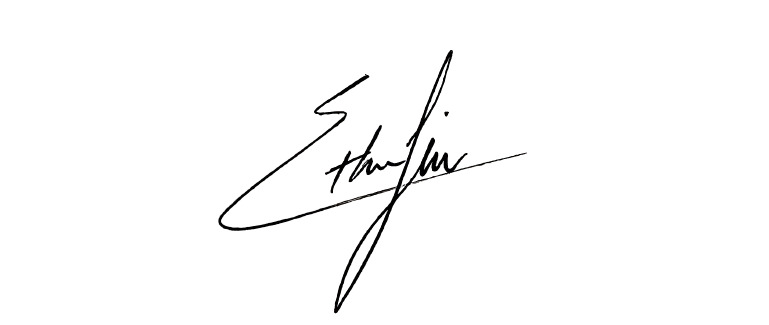
Ethan Liu, Founder and President

Ready to Make a Difference?
Have questions or an idea you’d like to share? Fill out the quick form below and let’s team up to help our community thrive.